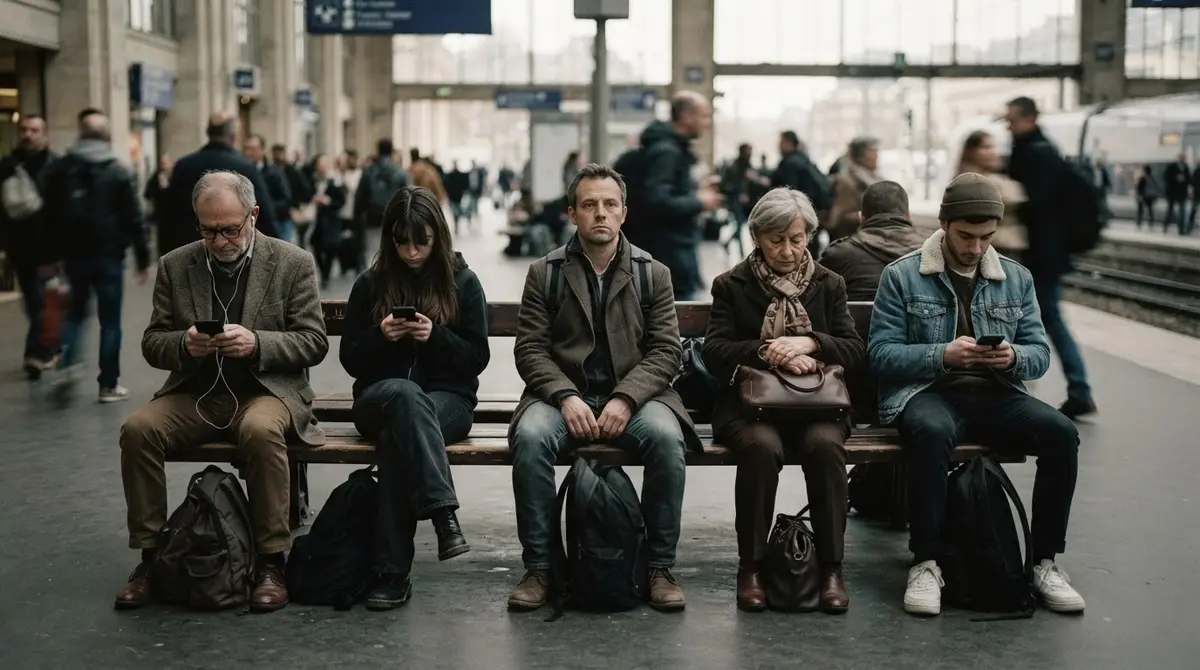
In mid-2025, the World Health Organization put a hard number on something a lot of us already felt. After reviewing the global evidence, its Commission on Social Connection concluded that loneliness and social isolation aren't just unpleasant. They are a measurable threat to human health, on a scale that rivals the biggest risk factors in medicine.
The headline finding: roughly 1 in 6 people worldwide are affected by loneliness, and that disconnection is linked to an estimated 871,000 deaths every year. That works out to more than 100 deaths every hour.
Connection is biological, not optional
The report frames social connection the way public health frames diet or exercise: as a fundamental driver of physical health, not a soft "nice to have." People with strong social ties tend to have better outcomes across the board, including lower rates of heart disease and stroke, stronger immune function, better mental health, and a higher likelihood of living longer.
The reverse is just as real. Chronic loneliness and isolation are associated with higher risk of stroke, heart disease, type 2 diabetes, cognitive decline, depression, anxiety, and early death. The body, it turns out, registers the prolonged absence of connection as a kind of ongoing stress.
Social connection should be treated as a public health priority, on par with the work we already do on smoking, nutrition, and physical activity.
It's not just an old-age problem
One of the most striking parts of the report is who is most affected. Loneliness is often imagined as something that happens late in life. The data tells a more complicated story.
Young people report some of the highest rates of all. Around 1 in 5 adolescents worldwide say they feel lonely, with teenagers reporting the highest levels of any age group. It also tracks with economic conditions: in low-income countries, roughly 24% of people reported feeling lonely, about double the rate in high-income countries, where the figure is closer to 11%.
Social isolation, the objective lack of contact rather than the feeling, follows a similar pattern. It affects up to 1 in 3 older adults and as many as 1 in 4 adolescents. In other words, this touches nearly every age and every region, just in different ways.
A problem that keeps getting harder to ignore
What makes these numbers urgent is the trend behind them. Even as our tools for staying in touch multiply, the share of people who feel genuinely connected has not kept pace. The WHO's director-general framed it plainly: in an age when the possibilities to connect are endless, more and more people are finding themselves isolated and lonely.
The costs aren't only personal. Loneliness and isolation strain health systems, reduce productivity, and weaken the community bonds that hold neighborhoods and workplaces together. That is why the Commission's central recommendation is so direct. This is not a private misfortune to manage alone. It is a public health priority that deserves the same serious attention we give to other leading drivers of disease.
The good news in the data
There is an encouraging flip side, and the report leads with it. Connection is also one of the most powerful protective factors we have. Strengthening social ties improves health and extends lives. Unlike many health risks, this one responds to ordinary, everyday action: showing up, reaching out, and spending time with people in person.
That is the gap we care about at Let's. The evidence is clear that the desire to connect is nearly universal and the benefits are profound. The hard part has always been turning that desire into actual time spent with actual people nearby. Making that first step easier is the whole reason we exist.
The science now confirms something humans have always sensed: we are healthier, happier, and we live longer when we are connected. The challenge of our time is making that connection reachable again.
Sources
- World Health Organization, Social connection linked to improved health and reduced risk of early death (30 June 2025). who.int
- World Health Organization, Commission on Social Connection (established 2024). who.int
- U.S. Surgeon General, Our Epidemic of Loneliness and Isolation (2023). hhs.gov/surgeongeneral
- Holt-Lunstad J., Smith T.B., Layton J.B. (2010), Social Relationships and Mortality Risk: A Meta-analytic Review, PLOS Medicine. doi.org/10.1371/journal.pmed.1000316